
Why native collagen
changes everything.
Most supplements deliver chemically fragmented amino acid chains. Axiomé keeps the native triple-helix architecture intact, the form your body’s own collagen already takes.
 Formation
Triple helix vs hydrolyzed fragments.
Same protein family. Different structural form.
The whole structure.
Preserved triple-helix spiral. Cold-extracted from marine fish skin. The form collagen takes inside your body.
Short fragments.
Broken into short peptide fragments by heat and enzymes. Still collagen, but no longer the whole structure.
Hydrolyzed collagen is still collagen. Native collagen is the whole structure.
Biologically active at the cellular level.
Captured, not processed
Marine collagen extracted from fish skins in its native triple-helix form, then preserved, never subjected to the chemical hydrolysis that fragments most collagen supplements.
Whole, not fragmented
Hydrolysis breaks collagen into loose fragments. Native collagen keeps its full triple-helix structure, the form collagen takes inside your body.
Whole-body support
Collagen is not only a skin protein. It is the main structural protein in your joints, tendons, bones and connective tissue.
Your body needs vitamin C to make collagen.
Vitamin C keeps the enzymes that form stable collagen working. Without enough of it, normal collagen formation is disrupted. Vitamin C also acts as an antioxidant and helps protect skin against oxidative damage.
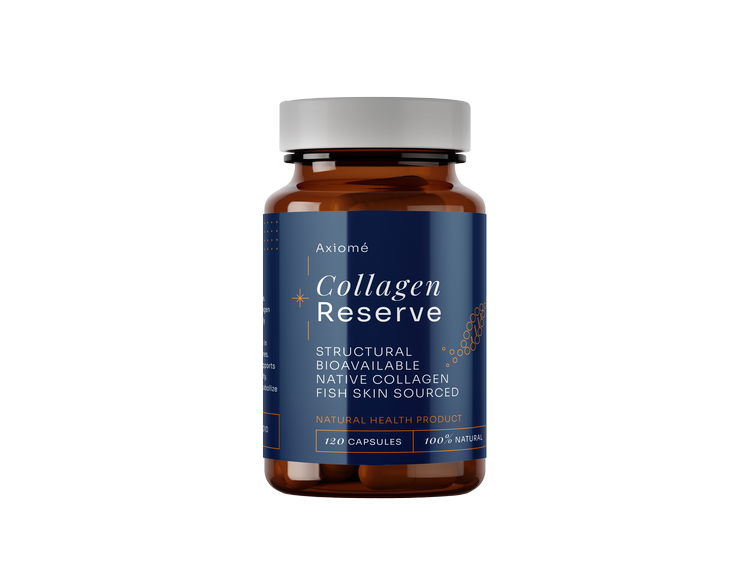
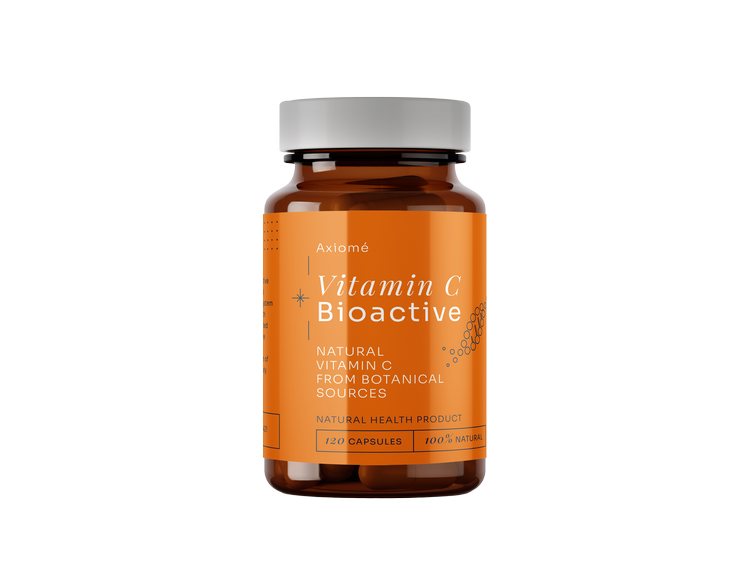
Take Collagen Reserve for the structure. Take Vitamin C Bioactive for the enzyme that builds it.
Vitamin C BioactiveWhat you are taking.
Skin is collagen
The primary structural protein behind elasticity, firmness and hydration.
Decline begins
After your mid-20s, production drops roughly 1% per year.
Native triple helix
Not fragmented like hydrolyzed collagen.
Capsules daily
Two Collagen Reserve and one Vitamin C Bioactive, with food.
From the Axiomé Journal.
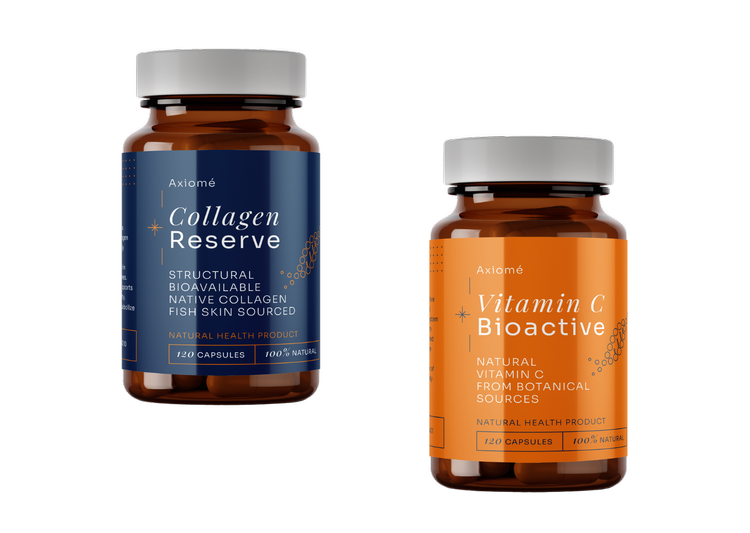
The science, in two bottles.
Native collagen for the structure. Botanical vitamin C for the process that builds it.