
Why Your Collagen Isn’t Working
Native vs Hydrolyzed Collagen: The Difference Most Buyers Never Hear About
You take collagen every day and quietly wonder if it does anything. Before you give up on it, look at the label. The problem is usually not how much you take. It is the source and how it was made, two things the front of the tub never tells you.
There are two kinds of collagen on the shelf. They come from the same protein family, but they are built differently, and that changes what you are buying.
Most collagen is hydrolyzed. What does that mean?
Most collagen sold today is hydrolyzed. Hydrolysis uses heat and enzymes to break the protein into small fragments, sold as collagen peptides. Native collagen skips that step and keeps its natural triple-helix structure, three chains wound together, the form collagen takes inside your body.
Collagen is the most abundant protein you have, roughly 30 percent of all your protein and more than half of your skin (Kasoju et al., 2010). Same protein family. Different structural form.
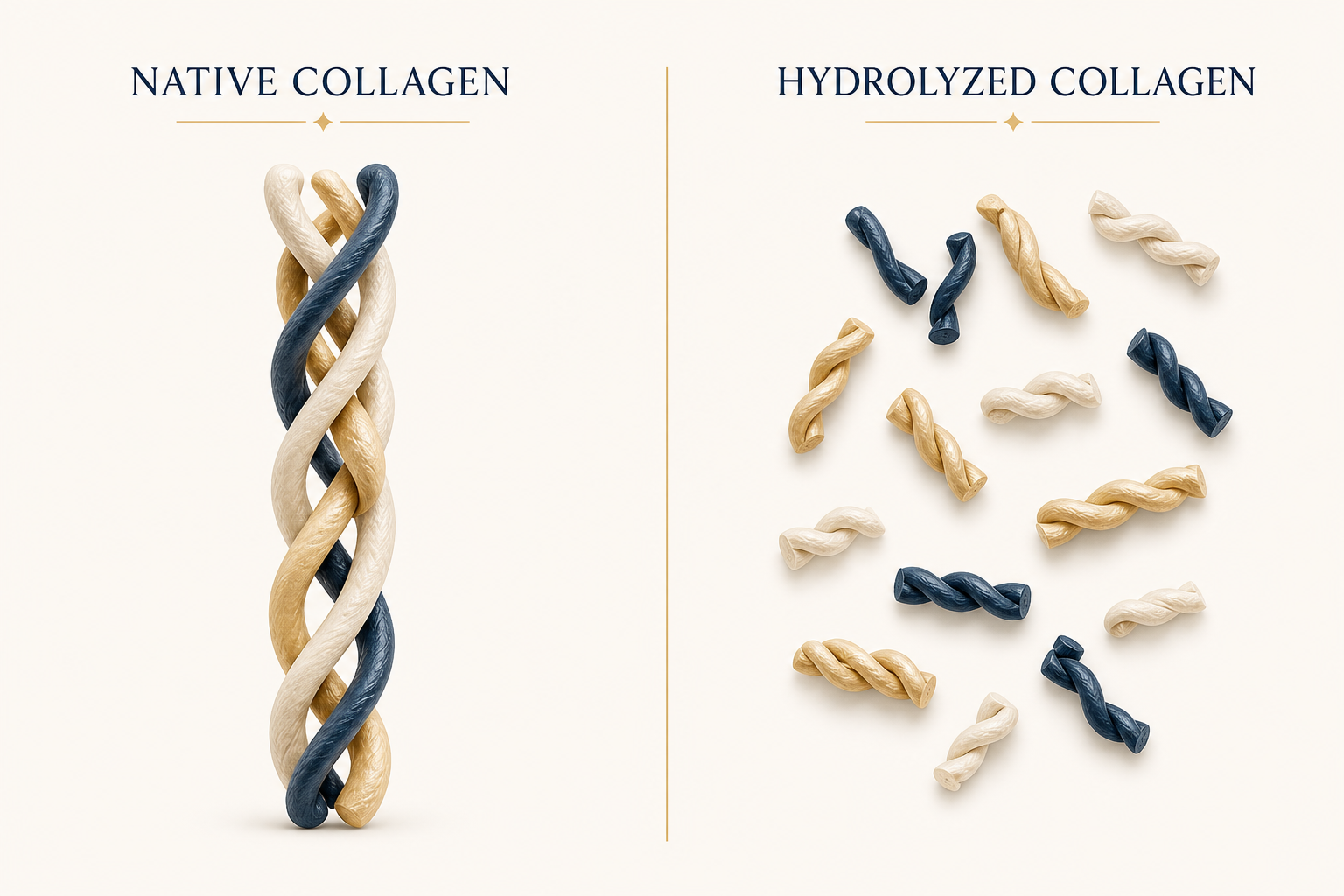

Pearl necklace illustrating intact native collagen versus separated fragments.
The pearl necklace test
Picture a pearl necklace. Native collagen is the necklace, whole and strung together. Hydrolyzed collagen is the same pearls after the string is cut, loose and scattered.
The scattered pearls are still real collagen, and your body can use them. They are simply no longer the whole piece. Neither is a trick. They are two different things, and you deserve to know which one you are paying for.
Stop choosing collagen by the biggest number on the tub
The industry sells collagen on milligrams. Five thousand. Ten thousand. Twenty thousand. A big number feels like a better deal. It tells you nothing about the two things that actually decide quality: where the collagen comes from, and how it was processed. Ask those two before you look at the grams.
Source: not all collagen comes from the same animal
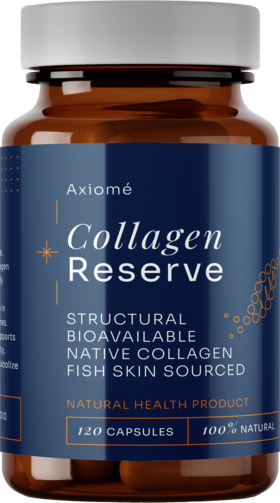
Most collagen on the market is bovine or porcine, from cow or pig hides. Marine collagen, from fish, has a lower molecular weight and a lower denaturation temperature, which is widely reported to make it more readily absorbed than bovine or porcine collagen. Axiomé Collagen Reserve is marine, drawn from fish skin. That is an advantage in the raw material, before anything else is considered.
Processing: heat changes everything
The triple helix is fragile. It resists being broken down only at low temperatures, below about 20 degrees (Kasoju et al., 2010). High-heat hydrolysis reduces collagen to fragments. Gentle, low-temperature extraction does the opposite: it preserves the native structure.
Research on cold-extracted silver carp skin collagen, the same marine family Axiomé draws from, found the triple helix kept intact, and the extract also carried naturally occurring small peptides, seven to twenty-nine amino acids long (Wojtkowiak, Frydrychowski et al., 2016). Gentle extraction gives you both: the whole structure, and the small peptides, without cooking the collagen down.
So why native marine collagen for Axiomé?
Because the choice was source and process first, grams last. Axiomé Collagen Reserve is native marine collagen from fish skin, processed to preserve its triple-helix structure. It is a formulated complex, not a plain collagen tub. Each capsule pairs the marine collagen with bladderwrack, vitamin E and tocotrienols. NPN 80114010. Made in the EU, in Poland, to ISO 22000:2018.
The Axiomé difference isn't about taking more. It's about knowing what you're taking.
Native marine collagen from fish skin.
Non-hydrolyzed, triple-helix structure preserved.
With bladderwrack, vitamin E and tocotrienols.
120 capsules, two a day with food.
NPN 80114010. Made in the EU to ISO 22000:2018.
A 30-second test before you buy any collagen
1. Native or hydrolyzed? Read the label.
2. What is the source? Marine, bovine, or porcine.
3. Where is it made, and to what standard?
Collagen is only half the conversation
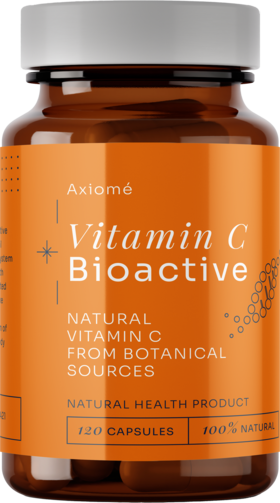
Your body needs vitamin C to build collagen. Axiomé Vitamin C Bioactive, from botanical sources, is the companion to Collagen Reserve. Two products, one routine, chosen to work together.
Don't just buy collagen. Know your collagen.
The smartest thing you can do is stop comparing milligrams and start reading source and processing. That is where the real difference lives.
Sources
Kasoju N, Ali SS, Dubey VK, Bora U. Exploiting the Potential of Collagen as a Natural Biomaterial in Drug Delivery. Journal of Proteins and Proteomics. 2010;1(1):9-14.
Wojtkowiak D, Frydrychowski AF, Hadzik J, Dominiak M. Identification of Small Peptides of Acidic Collagen Extracts from Silver Carp Skin and Their Therapeutic Relevance. Advances in Clinical and Experimental Medicine. 2016;25(2):227-235.