
Beyond Glowing Skin: What Can Collagen and Vitamin C Support?
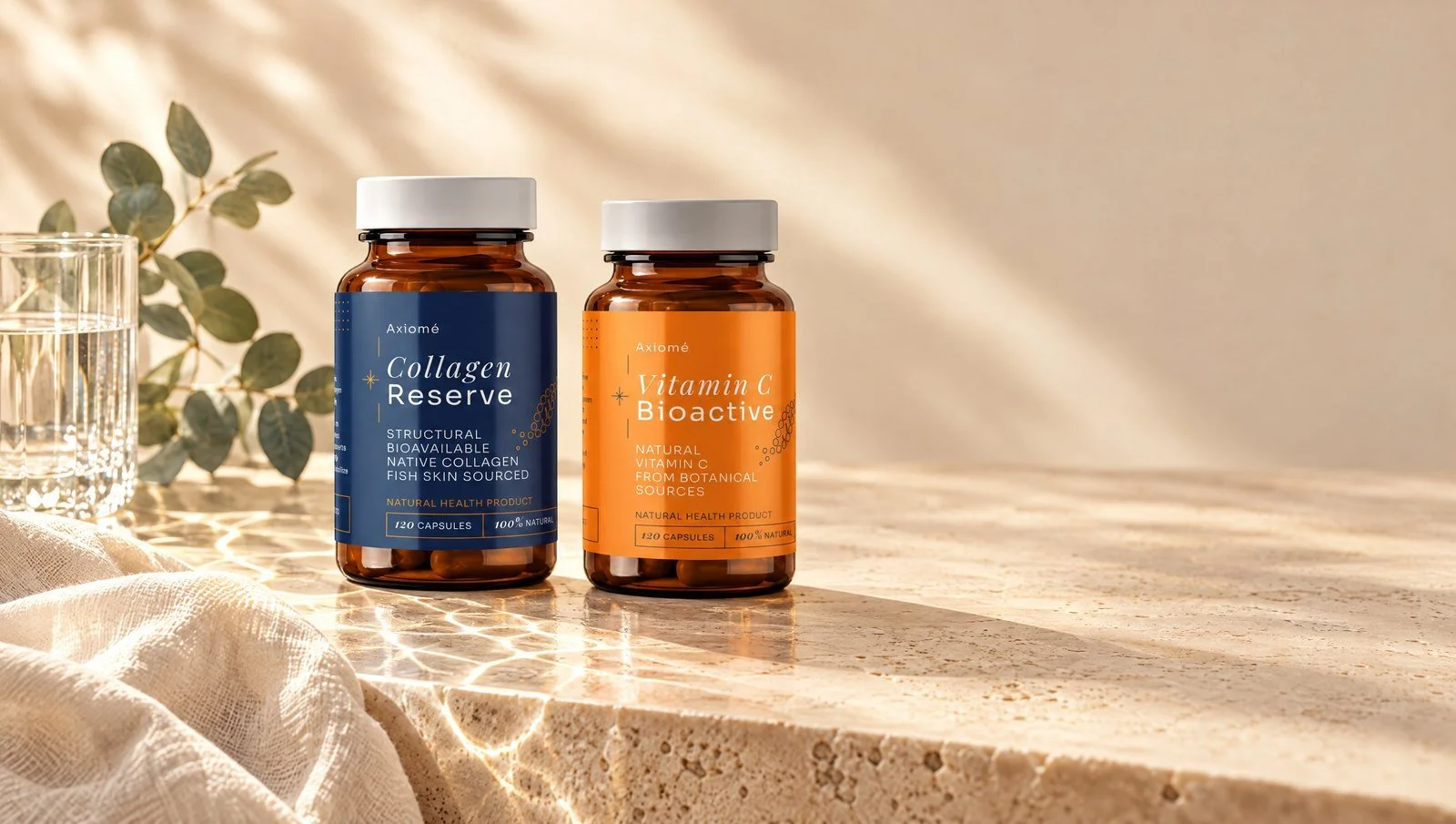
"I want healthier-looking skin. But what else am I getting from these supplements?"
It is the question I hear most. Skin is why most people start. It is the part you see in the mirror. But collagen is not a skin protein. It is the main structural protein in your whole body, and your body needs vitamin C to make it. [1]
So the better question is where collagen and vitamin C work, and what the research shows in each place. Here are four areas, starting with the one you came for.
1. Skin elasticity and hydration
Glow is not something a laboratory measures. Researchers measure hydration, elasticity and the density of the dermis, the layer under the surface. Those are the qualities behind skin you see as healthy and bright.
Collagen is the main building material of the dermis. Healthy skin also holds high levels of vitamin C, which supports collagen production and helps protect skin against oxidative damage from the sun. [2]
In a 12-week trial of 32 people, a collagen peptide supplement improved skin hydration and elasticity. [3] A 2024 randomized trial in Nutrients tested collagen with vitamin C and reported improvements in several skin measurements compared with placebo. [4]
2. Joints and cartilage
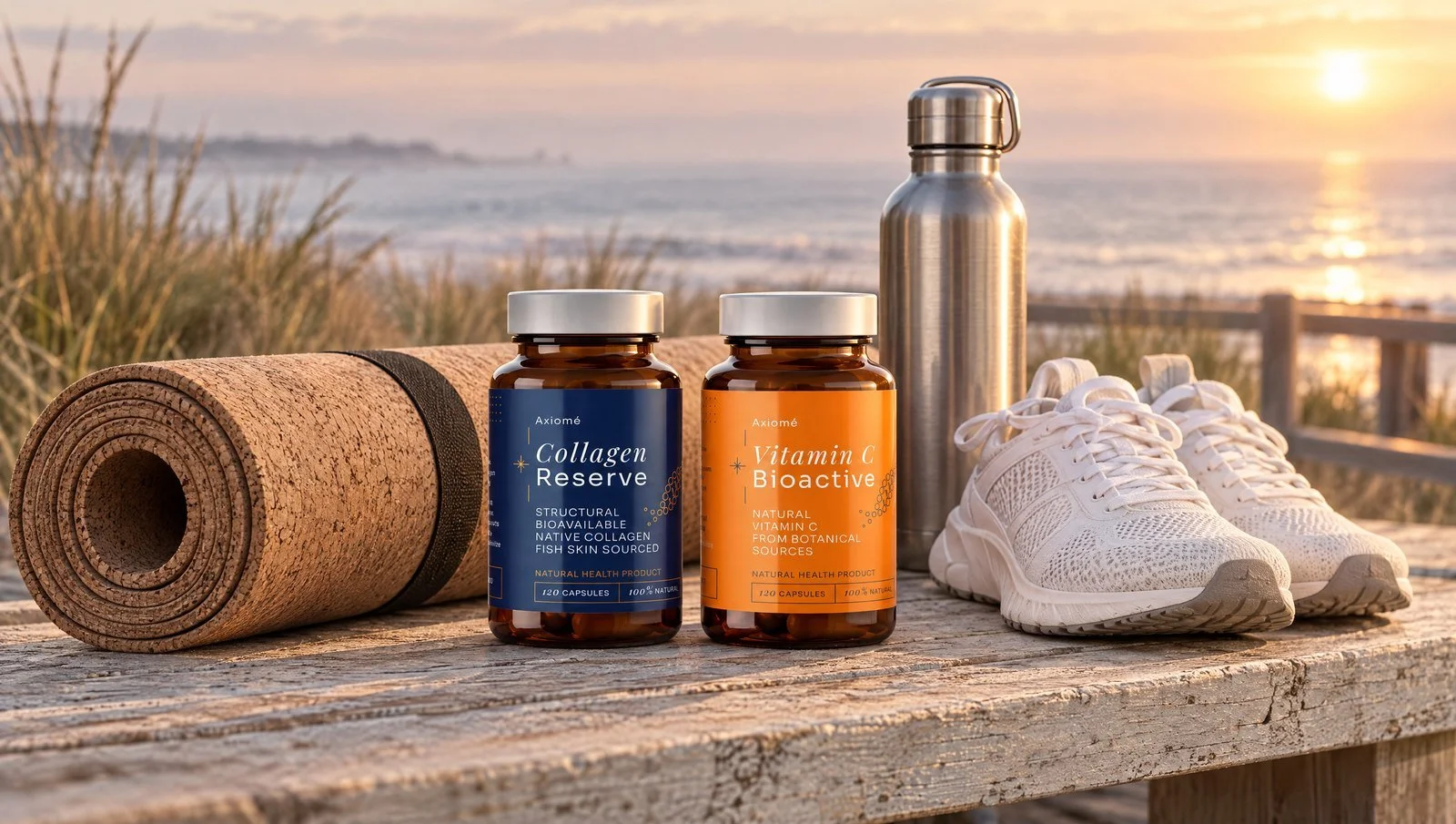
Cartilage, tendons and ligaments are built largely from collagen. They take the load every time you walk, lift or climb stairs, and your body maintains them with the same collagen-building process as your skin.
A 24-week placebo-controlled study followed 147 university athletes with activity-related joint pain. The group taking collagen reported less joint pain when walking, standing and lifting than the placebo group. [5]
3. Bones and connective tissue
Collagen gives bone its flexible framework. Minerals give it hardness. Without the collagen framework, bone turns brittle.
In a 12-month randomized, placebo-controlled trial, 131 postmenopausal women with age-related loss of bone density took 5 grams of specific collagen peptides a day. Bone mineral density in the spine and hip rose in the collagen group compared with placebo. [6]
Collagen also forms part of the connective tissue in the wall of your digestive tract. The same building blocks and the same vitamin C your body uses for skin and joints go into that tissue too.
4. Immune function and antioxidant defence
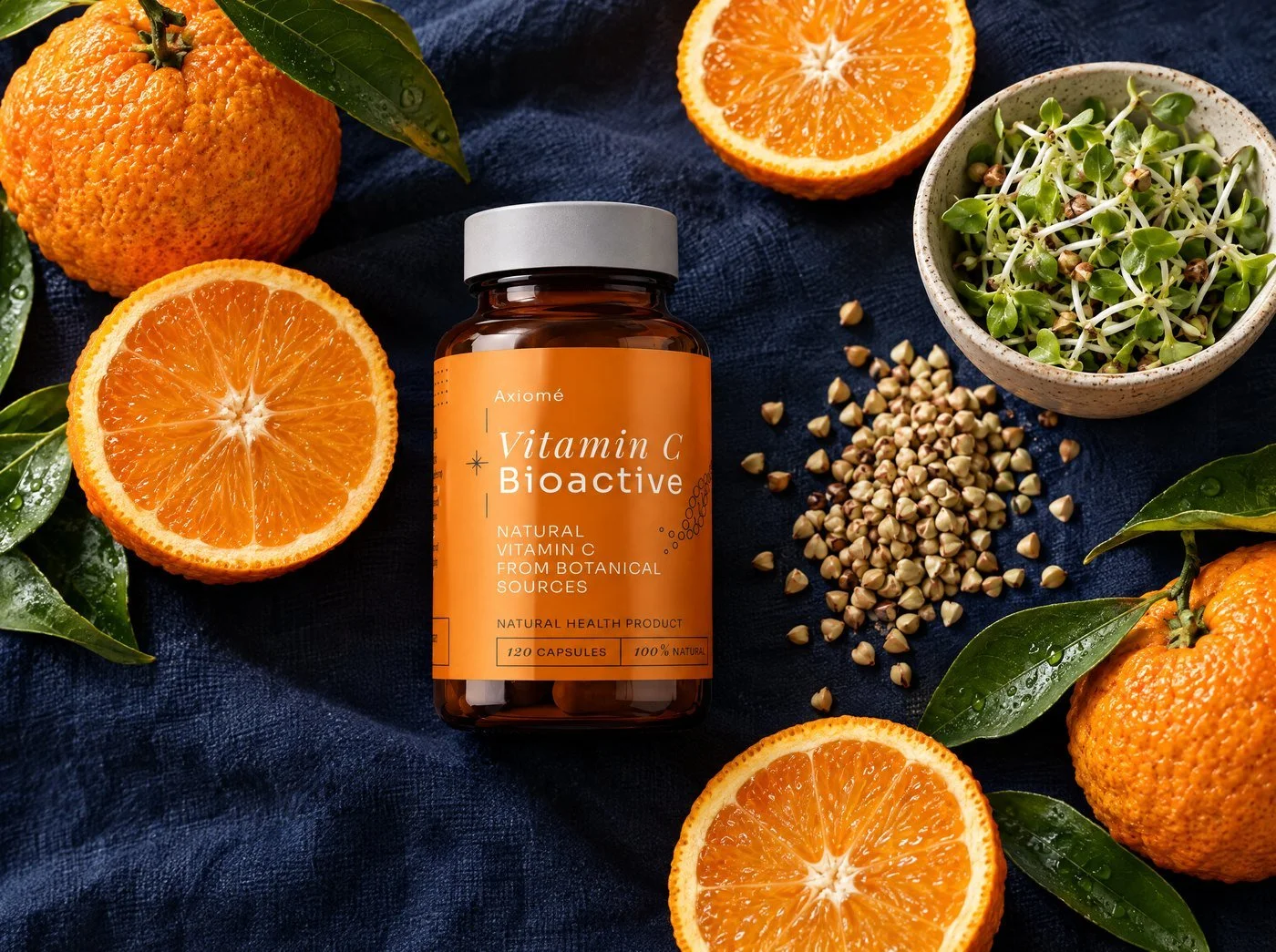
This is where Vitamin C Bioactive does most of the work. Vitamin C supports several parts of your immune system, helps maintain the skin barrier against pathogens, and acts as an antioxidant. A lack of vitamin C weakens immunity. [7]
Collagen Reserve adds its own antioxidant support. Each capsule contains 6 mg of vitamin E and 4 mg of tocotrienols, a natural form of vitamin E. Vitamins C and E work as a pair, with vitamin C helping to restore vitamin E after it has done its job. [8]
No miracle. Real support.
No supplement is a miracle, and I will never sell you one. What collagen and vitamin C do is support the systems your body already runs every day: skin, joints, bone, connective tissue and immune defence.
What you take matters. Axiomé™ is a high-quality, medical-grade supplement: native, non-hydrolyzed marine collagen in its whole triple-helix form, and vitamin C from plants, not synthetic ascorbic acid. Both are made in the EU to ISO 22000:2018. Why Your Collagen Isn't Working explains why native collagen is different. For timing and how much vitamin C you need, read Do You Need to Take Vitamin C With Collagen?.
What each product contributes
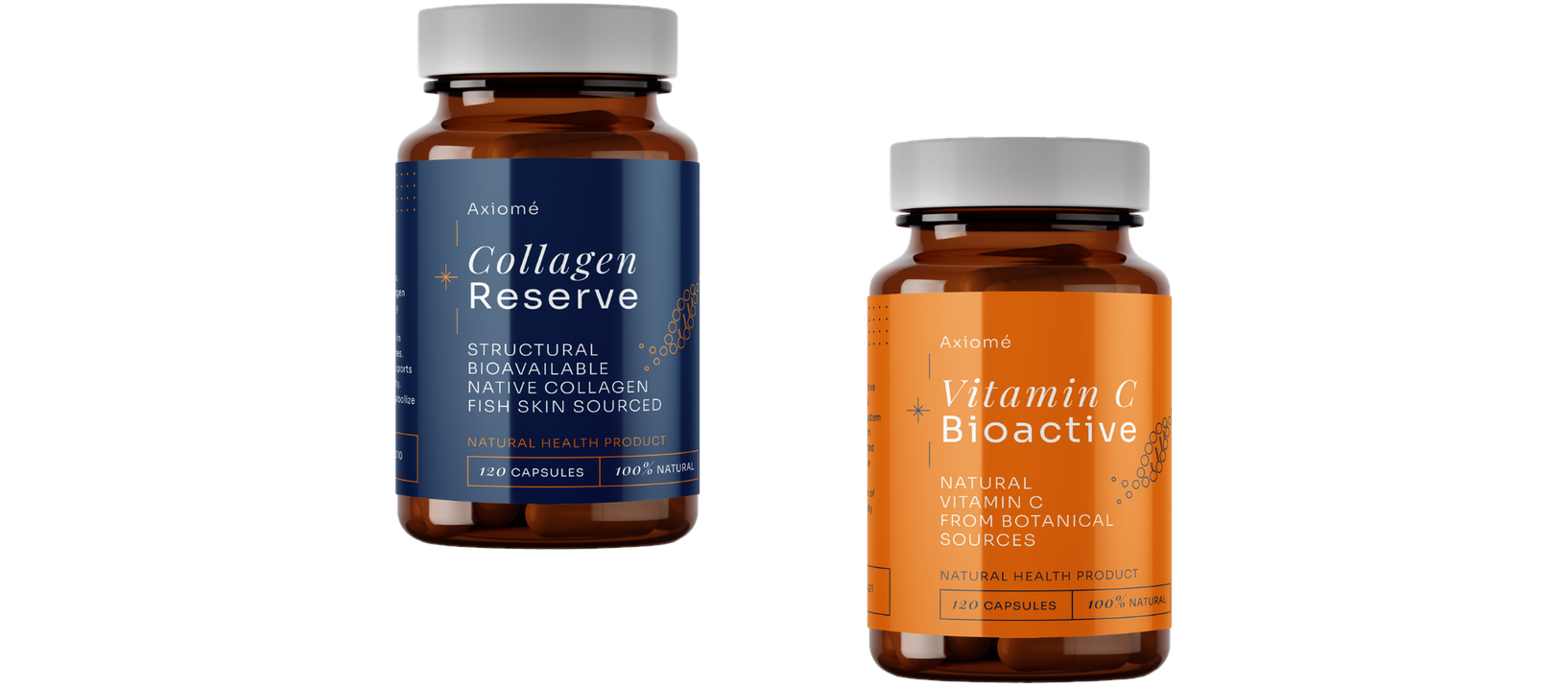
Axiomé™ Collagen Reserve brings the structure. Native, non-hydrolyzed marine collagen from fish skin, kept in its whole triple-helix form. Each capsule contains 24 mg of native marine collagen, 150 mg of bladderwrack, 138 mg of lemon fruit extract, 6 mg of vitamin E and 4 mg of tocotrienols. Two capsules a day. 120 capsules per bottle. Made in the EU, in Poland, to ISO 22000:2018. NPN 80114010.
Axiomé™ Vitamin C Bioactive brings the vitamin C your body needs to build collagen, plus immune and antioxidant support. 150 mg of Bitter Orange extract and 50 mg of Germinating Buckwheat extract in each capsule, vitamin C from botanical sources rather than a synthetic ascorbic acid isolate. One capsule a day with food. 120 capsules per bottle. NPN 80117421.
The two-product routine
Take Collagen Reserve for the structure. Take Vitamin C Bioactive for the enzyme that builds it. Together they cover both sides of one biochemical process, not two unrelated products sold as a bundle.
Start with the skin you want. Stay for everything else collagen holds together.
Explore the Axiomé™ Duo · Collagen Reserve · Vitamin C Bioactive
Sources
Study details retrieved via PubMed.
[1] Vasta JD, Raines RT. Human Collagen Prolyl 4-Hydroxylase Is Activated by Ligands for Its Iron Center. Biochemistry. 2016. DOI: 10.1021/acs.biochem.6b00251.
[2] Pullar JM, Carr AC, Vissers MCM. The Roles of Vitamin C in Skin Health. Nutrients. 2017, 9(8), 866. DOI: 10.3390/nu9080866.
[3] Choi SY et al. Effects of collagen tripeptide supplement on skin properties: a prospective, randomized, controlled study. Journal of Cosmetic and Laser Therapy. 2014, 16(3), 132-137. DOI: 10.3109/14764172.2013.854119.
[4] Žmitek K et al. The Effects of Dietary Supplementation with Collagen and Vitamin C and Their Combination with Hyaluronic Acid on Skin Density, Texture and Other Parameters. Nutrients. 2024, 16(12), 1908. DOI: 10.3390/nu16121908.
[5] Clark KL et al. 24-Week study on the use of collagen hydrolysate as a dietary supplement in athletes with activity-related joint pain. Current Medical Research and Opinion. 2008, 24(5), 1485-1496. DOI: 10.1185/030079908x291967.
[6] König D et al. Specific Collagen Peptides Improve Bone Mineral Density and Bone Markers in Postmenopausal Women: A Randomized Controlled Study. Nutrients. 2018, 10(1), 97. DOI: 10.3390/nu10010097.
[7] Carr AC, Maggini S. Vitamin C and Immune Function. Nutrients. 2017, 9(11), 1211. DOI: 10.3390/nu9111211.
[8] Traber MG, Stevens JF. Vitamins C and E: beneficial effects from a mechanistic perspective. Free Radical Biology and Medicine. 2011, 51(5), 1000-1013. DOI: 10.1016/j.freeradbiomed.2011.05.017.